
 De Alexandra Panaitescu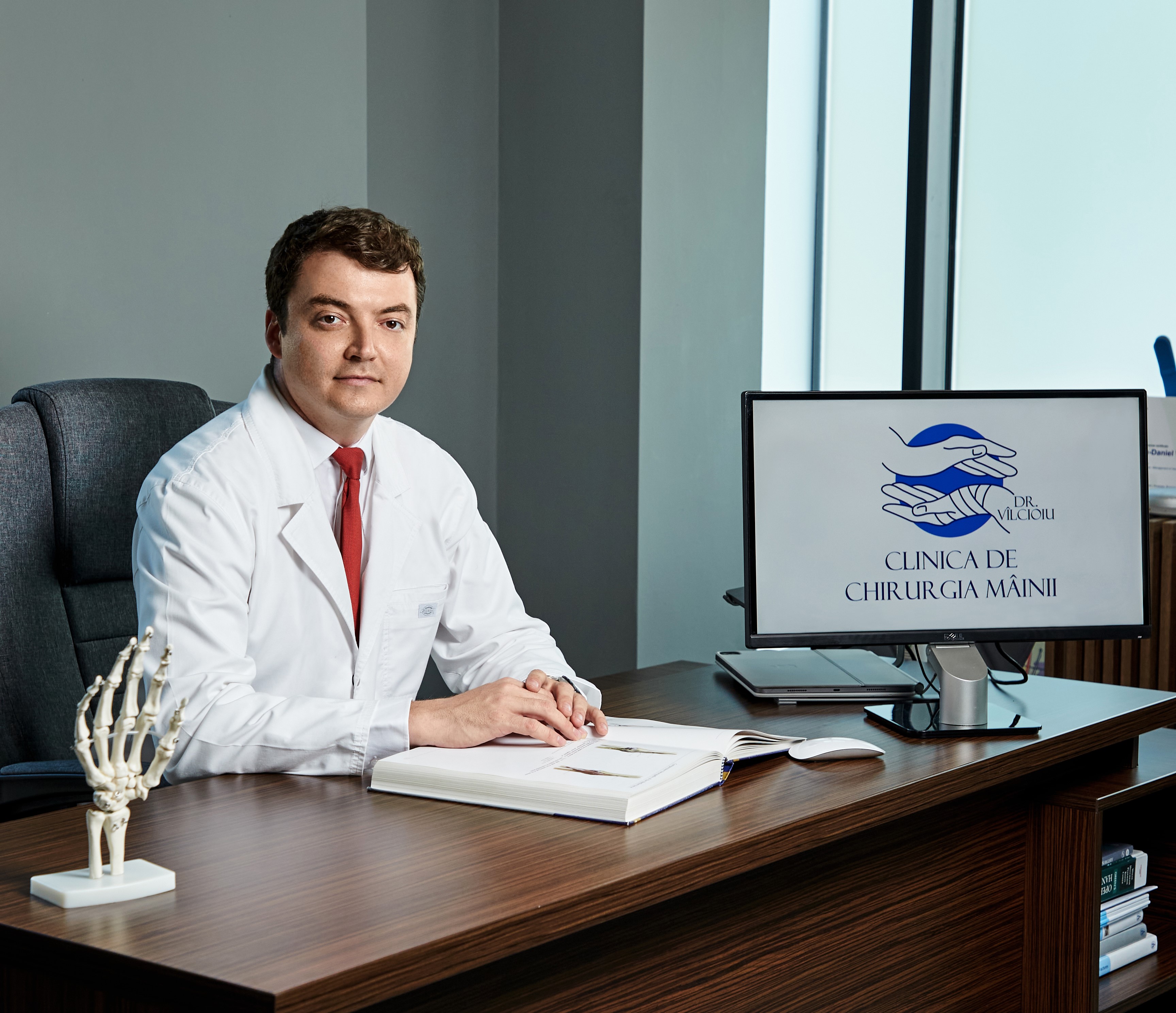
EnLife News: What is, in your opinion, the current state of hand surgery in Romania? What progress have you observed in recent years and what are the main needs of this field?

Dr. Daniel Vîlcioiu: Hand surgery in Romania has evolved significantly in recent years, both in terms of surgical technique and integrated patient approach. We are increasingly seeing successful complex interventions, cases of functional reconstruction that would have previously had a reserved prognosis.


However, several pressing needs remain: standardization of protocols, equitable access to quality materials, and the development of regional specialized centers. There is also a need for better recognition of this subspecialty within the Romanian medical system.
EnLife News: How is hand surgery addressed in medical schools and in resident training? Do you think there are sufficient resources and opportunities for specialized training for young doctors?
Dr. Daniel Vîlcioiu: Hand surgery is, unfortunately, insufficiently present in the basic university curricula. Most residents come into contact with this discipline only incidentally, during orthopedic or plastic surgery internships.

There are specific initiatives and courses organized by the Romanian Society of Hand Surgery, but for a thorough training, accredited centers, dedicated internships and the possibility of formal over-specialization are needed. Young doctors are interested, but the system must provide them with the institutional framework and the necessary resources.
EnLife News: How does Romania position itself in terms of hand surgery in relation to international standards and practices? Are there major differences in terms of access to technology, materials or treatment protocols?
Dr. Daniel Vîlcioiu: In terms of professional training and individual expertise, we are competitive. We have doctors who operate at European standards. However, differences arise in the level of infrastructure and available equipment.

Access to cutting-edge technology, such as high-resolution microscopes or custom implants, is still limited in many public hospitals. In addition, the lack of uniform protocols means that treatment varies considerably from one center to another.
EnLife News: What are the biggest challenges facing hand surgeons in Romania? Are we talking about logistical challenges, professional training or multidisciplinary collaboration?

Dr. Daniel Vîlcioiu: The challenges are multiple. Logistically, the lack of rooms equipped for microsurgery or wrist arthroscopy is a real problem. From a professional point of view, there is a shortage of continuing education programs focused on hand surgery.
Multidisciplinary collaboration is essential, but often difficult in the absence of stable teams or an institutional culture oriented towards integrated work. Last but not least, professional and contractual recognition of hand surgery as a distinct subspecialty is slow to materialize.
EnLife News: What types of materials, implants or innovative technologies are currently used in hand surgery? Is there an increased interest in personalized solutions or state-of-the-art biomaterials?
Dr. Daniel Vîlcioiu: Yes, interest in personalized solutions is growing, especially in complex cases or post-traumatic reconstructions. Titanium implants or bioresorbable materials, as well as patient-adapted osteotendinous grafts, are increasingly being used.
Technologies such as 3D printing, virtual preoperative planning or augmented reality in the nervous system are being explored, timidly for now. They are starting to become commonplace abroad, and Romania can catch up with this gap through partnerships and targeted investments.
EnLife News: Looking to the future, how do you see the evolution of this field in Romania? What directions do you consider to be priorities for the development of hand surgery in the next 5-10 years?

Dr. Daniel Vîlcioiu: I believe that the priorities should be: officially recognizing hand surgery as a subspecialty, developing regional centers of excellence, and creating predictable training paths for young surgeons.
In the long term, the integration of new technologies, such as artificial intelligence in diagnostics and robotics in microsurgery, will become a reality in Romania as well. But for this, we need to start with solid and coherent steps now.
EnLife News: How is hand surgery divided between the public and private sectors? Are there significant differences in terms of patient access, resources, or available equipment?

Dr. Daniel Vîlcioiu: The private sector typically has better technical equipment and shorter waiting times, making it attractive for mild to moderate cases. However, complex cases, such as polytrauma or major reconstructions, remain in the care of public hospitals.
Differences exist, but complementarity between the two sectors should be encouraged. Public-private collaboration, especially in niche areas such as hand surgery, can bring concrete benefits to the patient.
EnLife News: What are the medical specialties with which hand surgery collaborates most frequently and how do you see the role of multidisciplinary teams in treating complex cases? Can you provide a concrete example from your experience?

Dr. Daniel Vîlcioiu: Hand surgery collaborates closely with plastic surgery, orthopedics, neurology, rheumatology, physical medicine and rehabilitation. Also, in oncological cases, the involvement of the oncologist and the radiation therapist is essential.
A concrete example is the case of a patient with a nerve sheath tumor that required excision, nerve reconstruction with graft, followed by functional reeducation. Only through close collaboration between specialists was it possible to achieve a good functional outcome and a high quality of life for the patient.

 Enlife Solutions